Philip,
thanks for the historic piece.
Regarding the views here, I will chip in with some of mine.
I was sniffing through the Dictionary the other day and note that there is a reference to
Halford's - Floating Flies (1886), where he recommends the use of Pearsall's silk for all flies as it is in his view the best. . Reminded me of these postings.
Considering the popularity of his work I would suggest that Pearsall's would thereafter become the benchmark.
Pearsall's then gives us a standard, in shades, besides in density, as would have any other brand.
As to how old silk usage in flies is, I would suggest that silk has been generally available for many centuries, being traded globally via the ancient Silk Route from the Far East to Western Europe.
Of course not everyone would have access to silks and would have used whatever they had or preferred, like the rest of us; I started with sewing threads, split down to two of four strands, waxed, of course.

Nettle hemp and flax, besides wools from various animals could have been used.
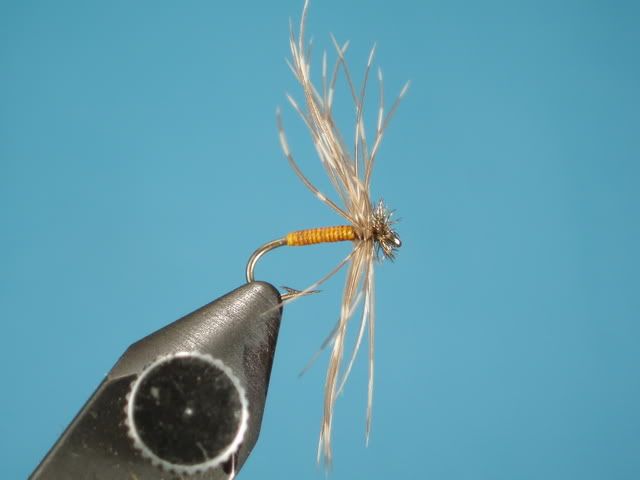
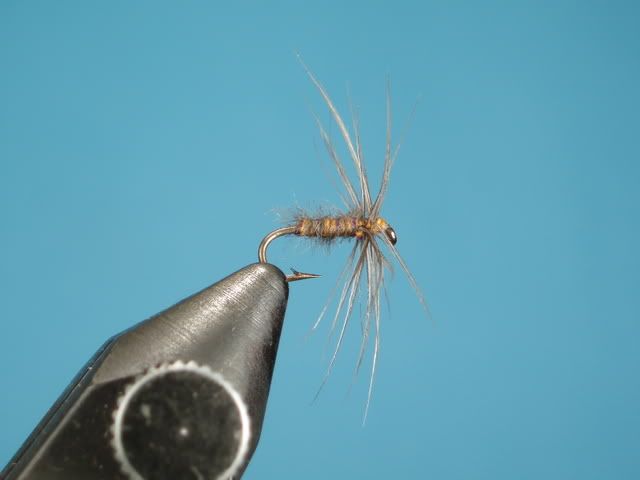
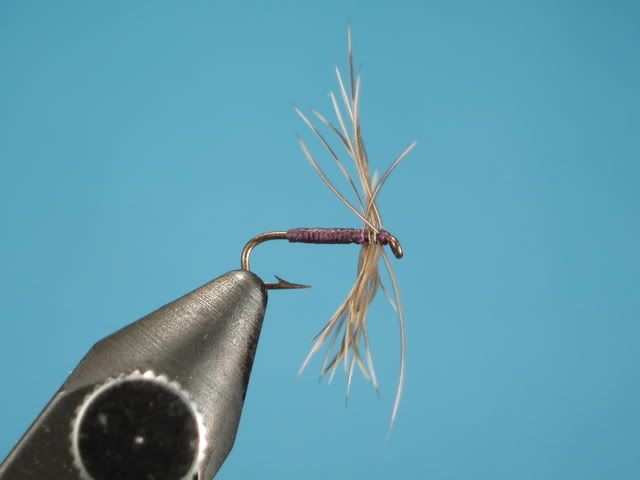
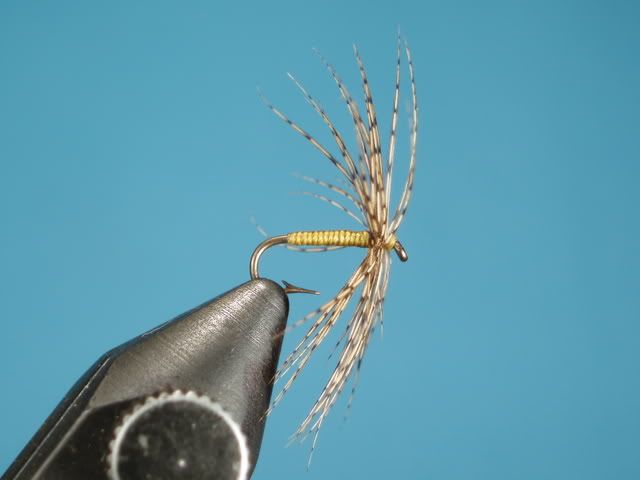
Next, thickness of body; I reckon they should be as skinny as possible,
I think it was Lawrie who said
the fish will see what he wants to see , thus less is more. The fish must judge, mine like skinny and minimal bodies.
The gut on a snelled hook should 'always' be within the gape, thus giving a direct strike.
Dame Juliana describes the fastening without giving any reason.
Skues insists on the method.
Tying in the hand is easier with the gut inside the shank;
will also produce a stronger fly, from my hand.
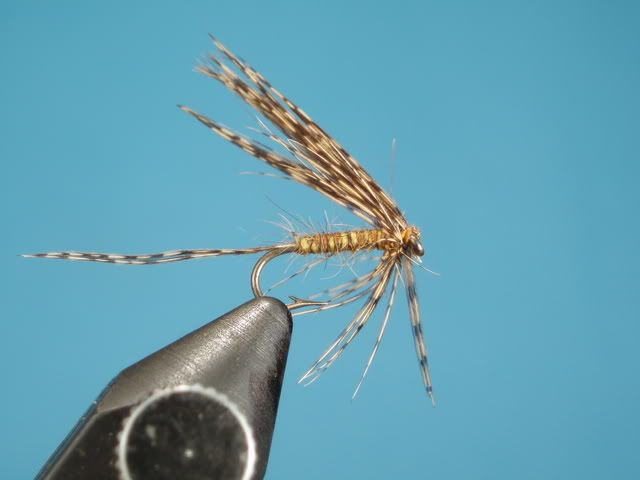
As to the proportions of this fly;
I think it is tied as a spinner, definitely by an amateur tyer(see note on snelling)
perhaps he used what was available, large hackle, none smaller being to hand.
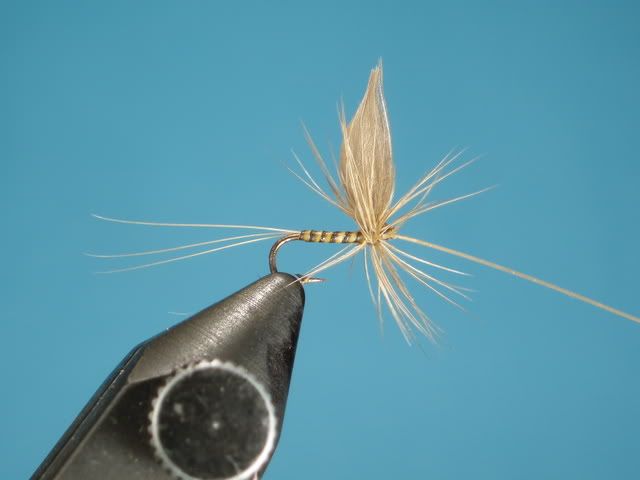
I would happily use that profile for a BWO hatch; well, an Orange Quill is generally prescribed..
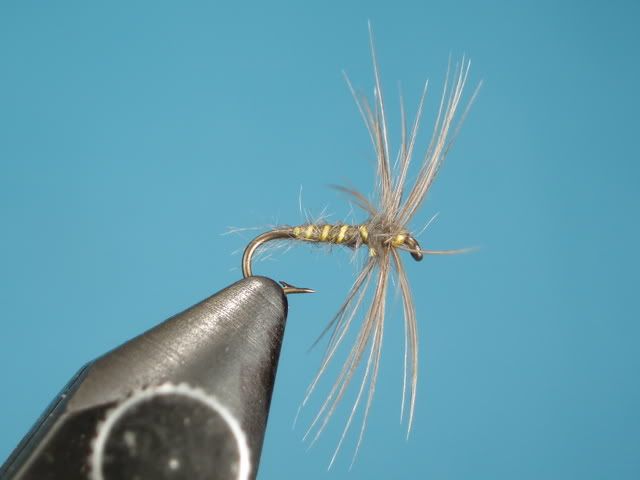
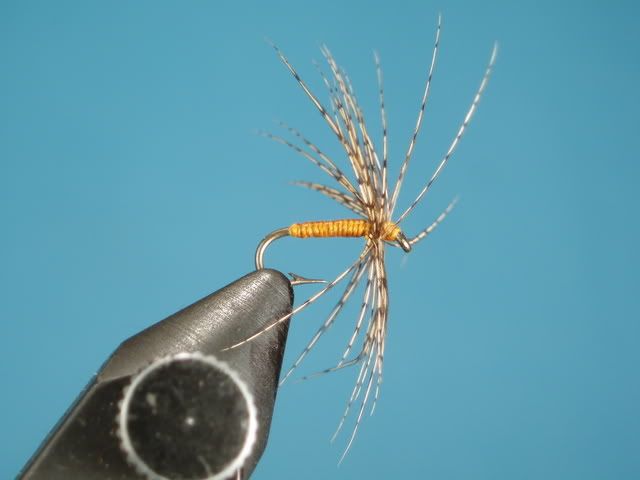
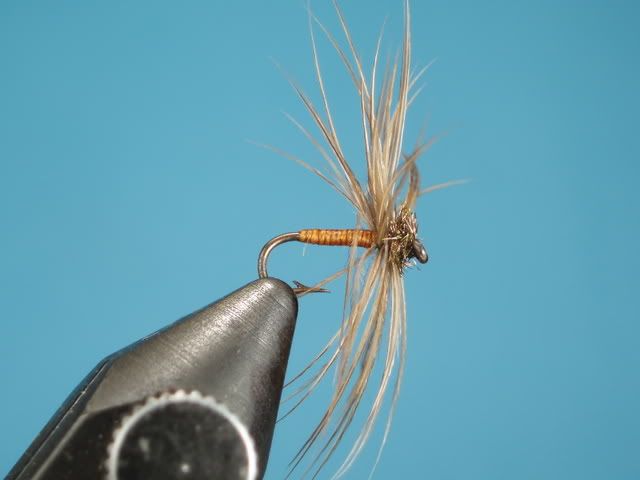
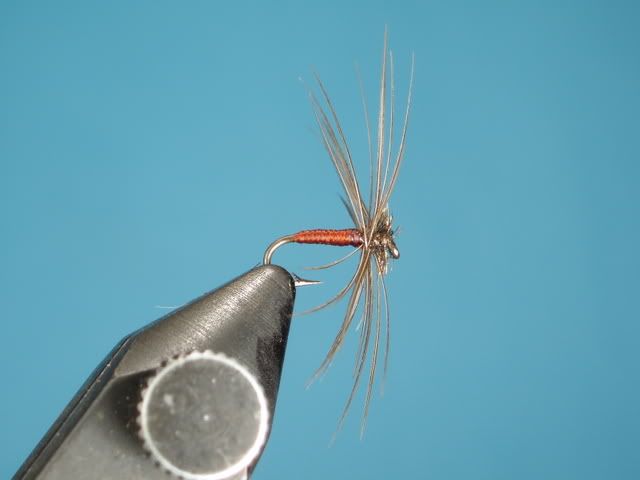
I generally see my soft hackles as nymphs, thus use little hackle and that short.
For flies to imitate duns and spinners more hackle is the preference, in this case paler in shade.
Tying flies very full hackled is a necessity of commercialism, allowing the angler to remove fibres to get the density he requires. Adding would be impossible.
Starting with dense hackling would allow the fly to last longer, even if it took a while to become attractive to the fish; in this case we start off with a dun/spinner imitation, attractive in the first instance, and after a dozen fish, use it as an emergent nymph.
When this fly was built there was no 'dry fly' code. The large soft hackle may have been designed to facilitate easy hookups on a big lightweight fly.
Considering its size, I guess the tyer put the gut on the outside of the shank to retain the hook gape. That takes the 'always' out of the statement on snelling above

Finer gut would have been expensive and frail.
It is well built, in that those few wraps have to build the fly and hold the fish, yet it retains a slim profile and a clean and small head.
That is just my 2cents, I am no expert.
I am finding it hard to get into a mindset of a century and a half ago in this case,
as the fly will do so many things, depending how tattered it becomes.
Thanks for the extremely interesting thread,
regards,
Roy
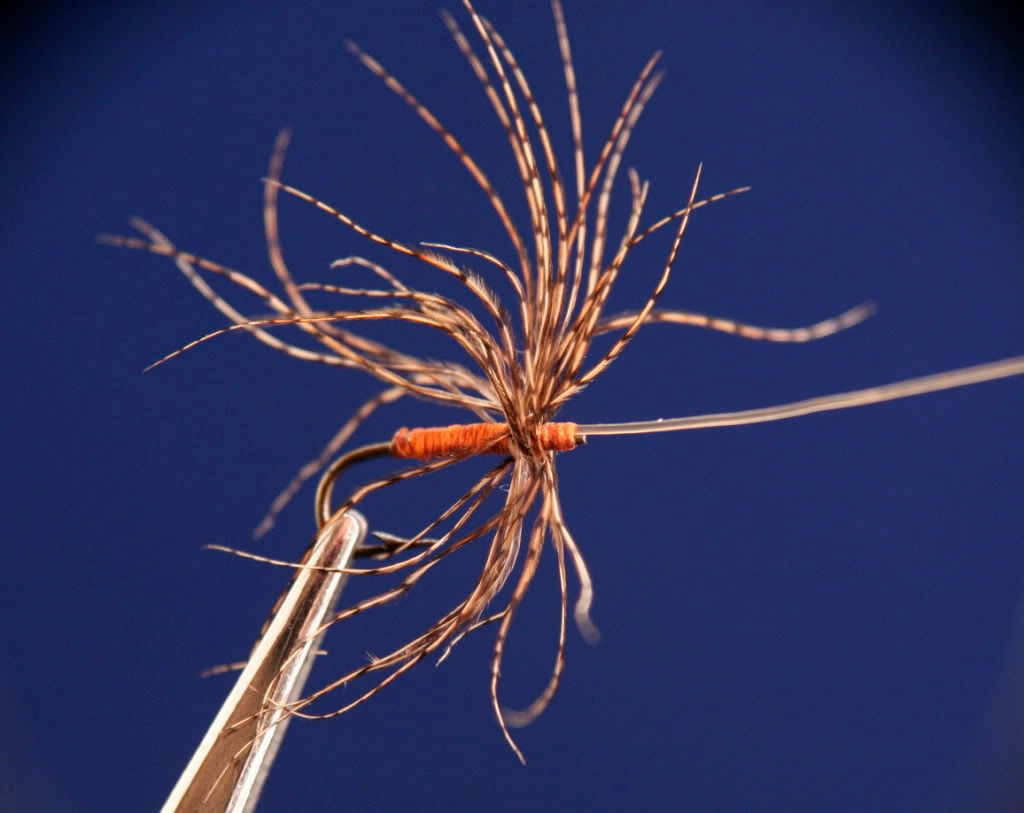
 But presumably it caught fish. I remeber when I used to tie the P&O like that - unintentionally!