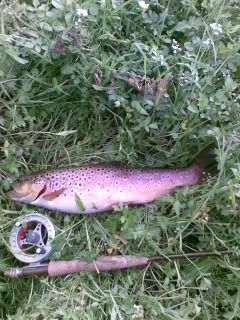
“Decisions , decisions, decisions, I do enough of that at work, why do they follow me to the river”, muttered William as he scanned the contents of the fly box. Has to be an olive, which one though he pondered, he stared at the box, glanced at the riffle and then back to the box. A size 14 greenwell’s perhaps, stewart style, hmmm.
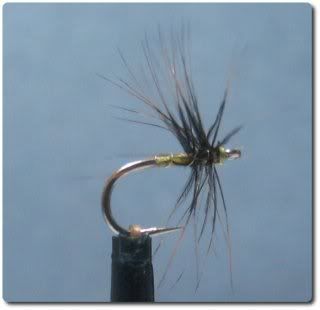
“The standard dressing looks appealing, though I haven’t fished one in a while”
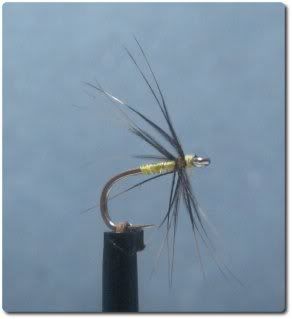
As William considered this all important decision his attention was drawn to a little nondescript pattern in the corner of his box, he teased it out from the foam and looked at in puzzlement. It slowly dawned on him, it was one of Mike Connors’s softwings as depicted on the forum by Otter. He laughingly announced to the world, “I should keep this for the inside riffle”. It comes well recommended, there are olives about, what the heck , top dropper MC softwing, middle dropper standard greenwell’s.
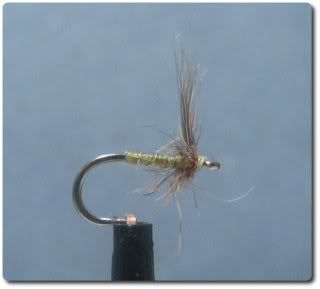
And so Williams decision was made, part curiosity, part logically and part fun.
As William put the final touches to his cast something caught the corner of his eye, a small movement on the far side of the river in a little bit of slack water. Just a mere flicker. William looked intently at the spot and thought he seen the merest of dimples on the dark grey scum laden surface. Out with the trusty binoculars and they soon confirmed the presence of a trout gently but regularly taking from the meniscus. William could not ignore the strong possibility that this was a good trout. The wet fly leader tippet was carefully laid out on a rock and a new one of 14ft formed with 7x at the point. A size 20 dry fly with a black CDC body and a wisp of white CDC wing was carefully tied on. The last few inches of leader was degreased,
Ready to do battle, William walked downstream and began the arduous and dangerous wade across the tail of the pool below. Big trout have to be earned and that’s why they are big, few anglers have the determination to learn how to find them and less have the determination to go to extremes to catch them. As William neared the slack back eddy he slowed his wading to inching his way upstream, the whole process of getting into position took 45 minutes to complete.
William stared at the slack water and breathed a sigh of relief when he seen a gentle sip , the trout was still feeding. From what William could see , the trout was doing a circular route and taking at three separate points, 2 on the upward path and one of the downward. The best plan was to target the point on the downward path and the cast must be made just after the trout took the first morsel on the upward path. If he had guessed wrong and the trout was moving anti-clockwise then he was doomed to failure. William made at least a dozen casts in his minds eye before letting out sufficient line downstream enable him to make the cast, whist still holding the fly.
The cast would mean holding the fly in his left hand, draw some line upstream with the rod tip, do a downstream roll and let the fly go at the same time, then make a perfect forward cast. William was glad the fly was dressed on a barbless hook.
Primed and ready to go William watched the trout take the first morsel, raised his rod drawing some fly line upstream, commenced the downstream roll and let go the fly….
To be continued


 , one hour and eleven minutes since he first spotted the rise, WOW.